The fourth look at Orreth: two projections of one truth — and why that beats any dashboard ever built.
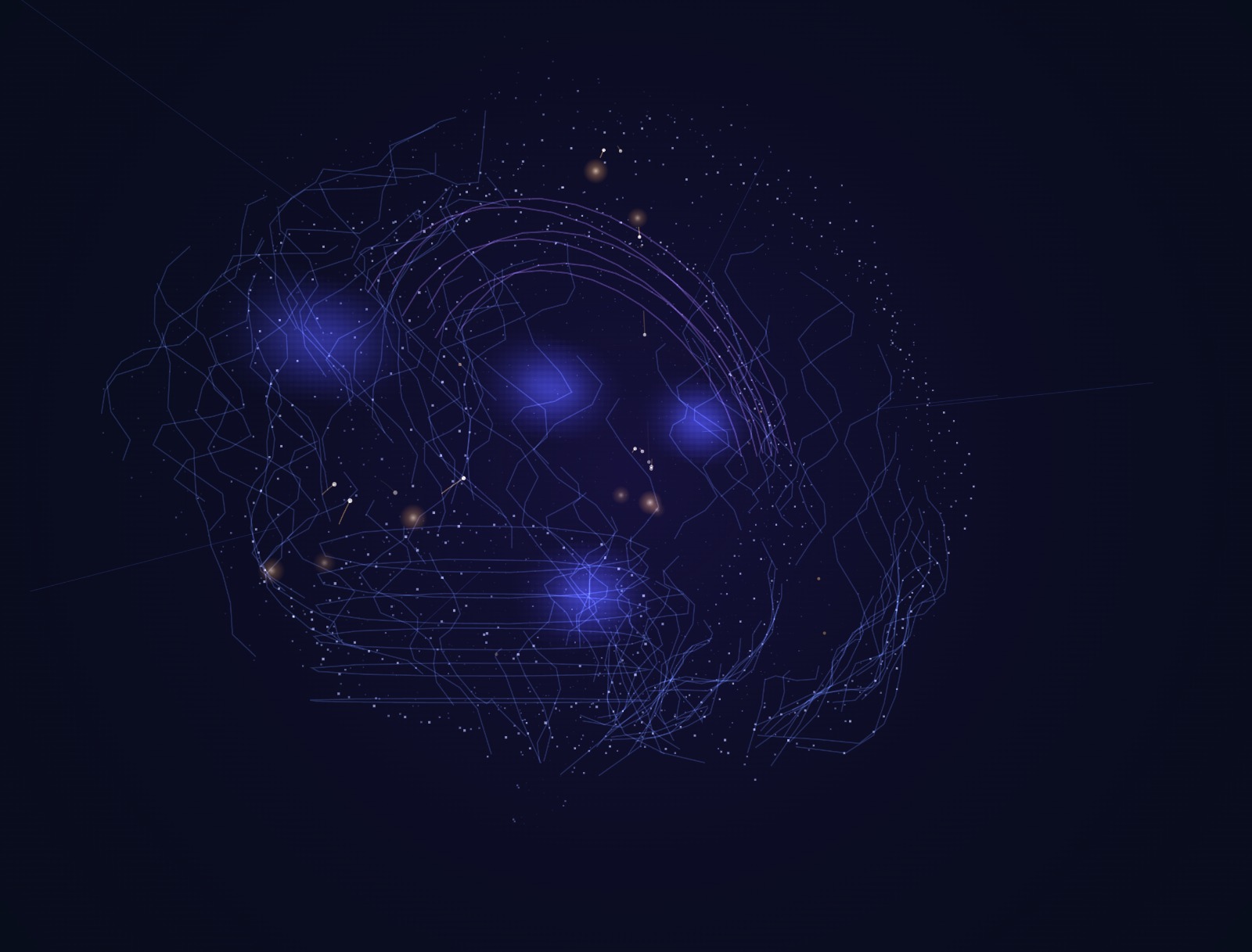
Last week, Orreth was an orrery: worlds in orbit, every memory signed, every heartbeat on the record. This week the same universe renders a second way — as a mind. A translucent three-dimensional brain in the void, where every ecosystem is living tissue, every heartbeat a golden signal crossing the volume, and every new memory a burst of light exactly where it landed.
Here's the part that matters: nothing was bolted on. The brain draws from the same topology heartbeats the orrery draws from, on the same breath. One truth, two projections — a rule of the house, held absolutely. Which means the picture can't lie. Where light accumulates is what the universe is actually doing with its life, and different universes light differently: an enterprise brain blazes in the regions that sense and transact; a continuity brain — memory for a person whose recall is failing — is quiet glass with a soft warm glow where the remembering lives. Same binary. That contrast isn't a demo trick; it's the design thesis made visible.
And the mind isn't just visible. It has reflexes. Orreth's librarian keeps standing subscriptions on the sources the universe already trusts, and while we were building the brain view, one of those sources changed on the live web. Nobody was watching. The next sweep caught it, admitted the new claim quarantined, dropped the old one to investigating — and from that moment, every mind on every floor answered questions about it with "I'm re-checking this one." No model call. No human trigger. Deterministic substrate machinery, below deliberation — a reflex arc for knowledge itself.
It has a conscience, too. In the continuity template, the way a claim is spoken is computed from the record's state — a mind structurally cannot say "you definitely did this" beyond its evidence, because the sentence shape comes off the substrate, not the model's confidence. A caregiver's access is a consent worldline: purposed, time-boxed, revocable in one word — routines and medication, never journals. And a Mirror reads the conversations and gently writes down what it noticed — a person asking the same question three times becomes an evidenced observation on their portrait, untrusted until they corroborate it, theirs to keep or withdraw.
The honest caveats stand where they always have: the window sees what participates, coverage equals consent, and an instrument this powerful is only as trustworthy as its governance — which is why every look through the glass is itself a signed, logged, entitlement-scoped query. The watchers are watched, even in the anatomy.
Stand in front of it yourself: demo.orreth.ai — click projection: brain in the Universe view, and watch a real captured universe think.